MTS Trolley Stations
Located in San Diego
Background Information
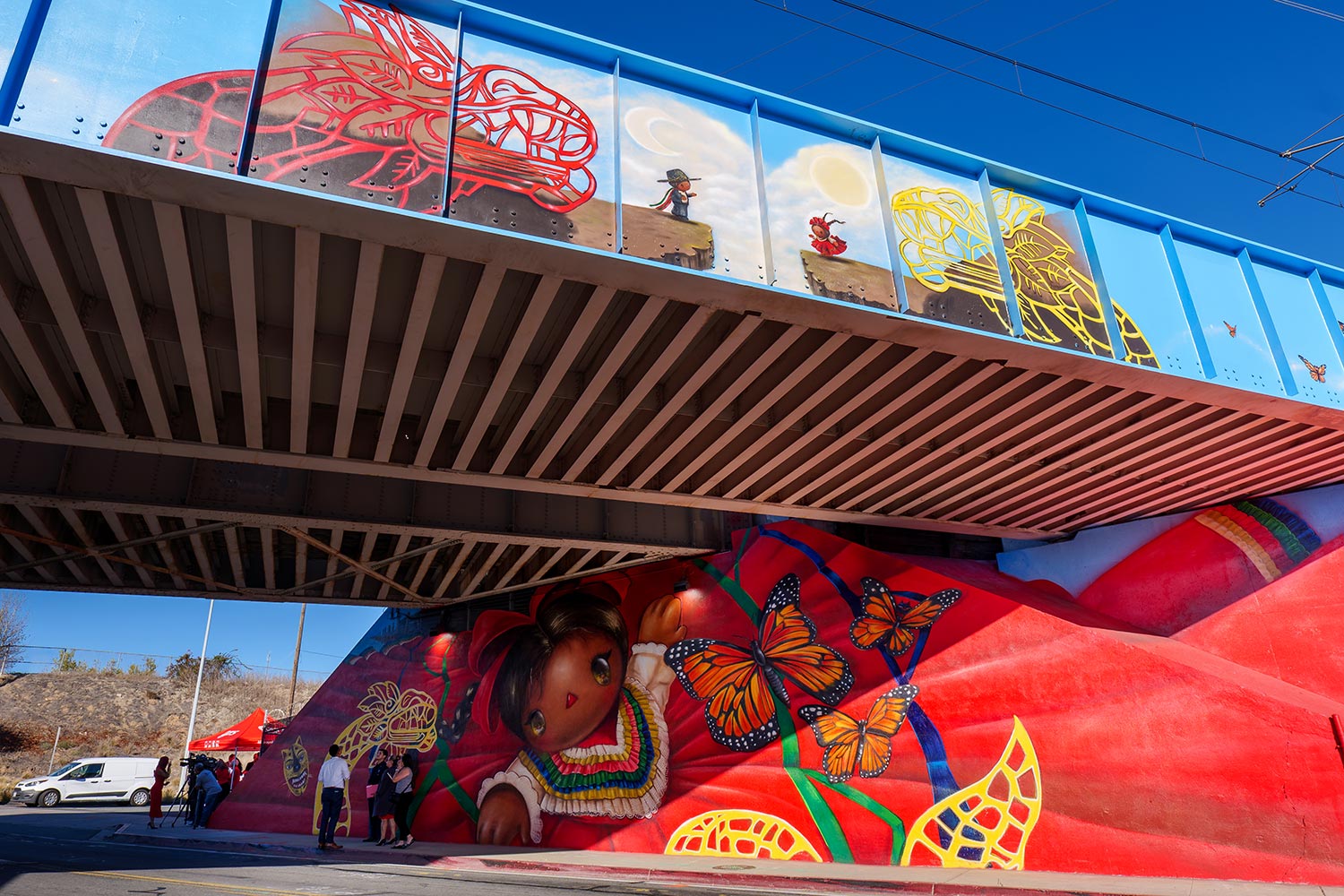
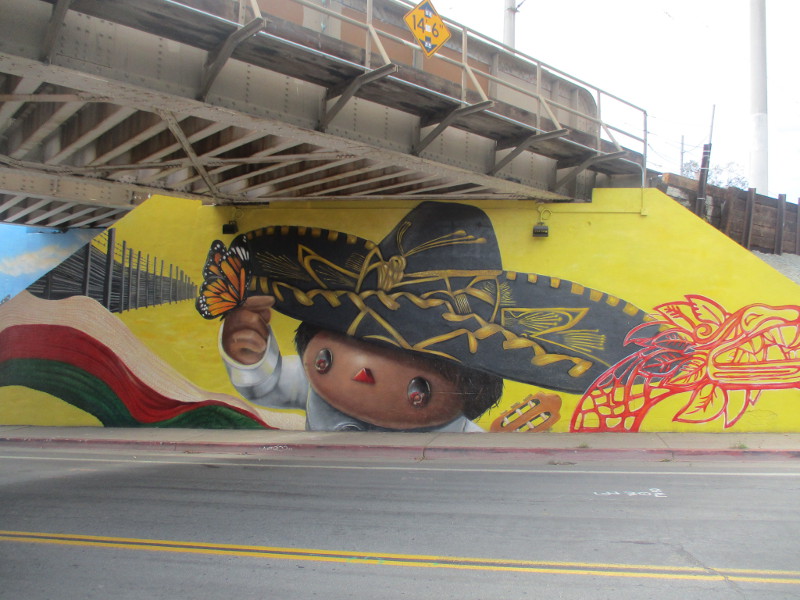
The murals installed at and around MTS trolley stations, especially along the Blue Line and in neighborhoods such as Barrio Logan, reflect an intentional integration of Latin American cultural narratives into our communities. These murals essentially show us scenes of daily life, borderland geography, religious and folkloric imagery, and intergenerational community ties. They appear in spaces that thousands of riders traverse as part of ordinary routines.
Transit stations are often treated as purely functional environments. By inserting complex visual narratives into these spaces, artists challenge that assumption. The stations become sites where riders encounter representations of communities that public discourse frequently stereotypes, marginalizes, or ignores. This encounter unfolds in the practices of commuting, waiting, and moving through the city rather than in formal artistic settings.
Rhetorical Analysis
Background Rhetoric
From a rhetorical perspective, transit murals operate as ambient media. Riders may not approach the images with the attentiveness they would give to a gallery exhibition. Instead, the murals work through repetition and presence. They slowly shape the background of perception, contributing to what McLuhan would describe as a media environment. This environment invites recognition of Latin American presence as an ordinary and expected feature of San Diego's urban fabric.
Platform Independence
These murals also exemplify communication that is independent of digital platforms. Doctorow emphasizes how digital platforms can gradually degrade user experience and constrict user agency. The visibility of transit murals does not depend on algorithmic ranking or monetization. Although photographs of the murals may circulate online, their primary communicative force derives from their placement within material infrastructure that residents must navigate regardless of their media consumption habits.
Potential Audiences
Transit systems tend to serve low income communities and workers who rely on public transportation. Locating Latin American visual narratives in such spaces ensures that those who are most affected by transportation policy see themselves reflected in the environment. At the same time, riders who hold more social and economic privilege encounter perspectives they may not otherwise seek out. This distribution of visibility alters the rhetorical dynamics of public space by foregrounding the interests of those who are usually marginalized in urban design processes.